A Step-by-Step Guide for Arizona Homeowners
Planning a Home Renovation? Start With the Right Checklist
A home renovation can completely transform how your home looks, feels, and functions. Whether you’re updating an outdated kitchen, remodeling bathrooms, changing your floor plan, or renovating your entire home, the success of the project often comes down to planning the right steps in the right order.
For Arizona homeowners, renovations can involve even more considerations—from permitting and structural changes to HVAC requirements, material selection, scheduling, and working around our extreme summer temperatures.
At Refine Construction LLC, we believe a successful remodel starts long before demolition begins.
This step-by-step home renovation checklist will help you understand the remodeling process from the first idea to the final walkthrough.
Step 1: Define Your Renovation Goals
Before calling contractors or selecting countertops, determine exactly why you’re remodeling.
Start by separating your renovation into needs and wants. This is one of the most important early planning steps because it helps establish priorities when developing the budget.
Your renovation needs may include:
- Fixing an outdated or inefficient layout
- Increasing storage
- Improving accessibility
- Replacing old plumbing or electrical systems
- Updating HVAC systems
- Repairing damaged areas
- Creating additional living space
- Improving the flow between rooms
Your wants might include luxury countertops, custom cabinetry, smart-home technology, premium flooring, decorative lighting, or other design upgrades.
Refine Construction Tip: Create two lists: Must Have and Would Like to Have. If the project needs adjustment later, you’ll know where you can make changes without compromising your main goals.
Step 2: Establish a Realistic Renovation Budget
Once you know what you want to accomplish, establish your budget.
A complete renovation budget should consider more than just materials and labor. Depending on the scope of your project, costs may include:
- Labor
- Building materials
- Cabinets and countertops
- Flooring
- Plumbing fixtures
- Electrical fixtures
- Appliances
- Architectural or engineering drawings
- Permits
- Structural modifications
- HVAC work
- Demolition and debris removal
- Temporary living arrangements
- Unexpected conditions
It’s also smart to maintain a contingency fund.
The planning material you provided recommends reserving approximately 10%–20% of the overall renovation budget for unforeseen expenses.
For example, demolition can reveal old plumbing, electrical problems, water damage, structural issues, or other conditions that weren’t visible before construction started.
Not sure what remodeling costs in Arizona?
Download our 2026 Arizona Remodeling Cost Guide to get a better idea of what to expect before starting your project.
Step 3: Choose the Right Licensed General Contractor
Your contractor can have one of the biggest impacts on your remodeling experience.
Don’t select a contractor based solely on the lowest estimate.
Before hiring an Arizona remodeling contractor, consider:
License and credentials: Verify that the contractor holds the appropriate Arizona contractor license for the work being performed.
Insurance and bonding: Ask whether the contractor is properly insured and bonded.
Experience: Look for experience with projects similar to yours.
Communication: You should understand who you’ll communicate with throughout construction and how project updates will be handled.
Scope of work: Make sure the proposal clearly explains what is and isn’t included.
Payment schedule: Understand when payments are due and what construction milestones they’re tied to.
Warranty: Ask what workmanship warranty is provided after completion.
Refine Construction LLC is an Arizona licensed, bonded and insured general contractor, providing residential remodeling, additions, new construction and commercial remodeling throughout our service area.
Step 4: Develop the Design and Floor Plan
Now it’s time to turn your ideas into an actual construction plan.
Depending on the scope of the renovation, this stage may include:
- Existing floor-plan evaluation
- New floor plans
- Kitchen layouts
- Bathroom layouts
- Cabinet designs
- Lighting plans
- Electrical layouts
- Plumbing changes
- Structural drawings
- Engineering
- 3D renderings
- Finish selections
If you’re removing walls, adding square footage, relocating plumbing or making structural modifications, additional plans or engineering may be necessary.
One mistake homeowners sometimes make is beginning demolition before enough design decisions have been finalized.
The better approach is:
Design first. Build second.
Step 5: Determine Which Permits Are Required
Not every cosmetic renovation requires the same approvals, but projects involving structural, electrical, plumbing, mechanical or significant layout changes may require permits and inspections depending on the jurisdiction and scope.
This should be addressed before construction begins.
Permit approval and scheduled inspections can also affect the project timeline, which is why they should be considered during initial scheduling.
An experienced Arizona general contractor can help determine what permits and inspections apply to your particular project.
Step 6: Finalize Materials Before Demolition
This is one of the most important steps for keeping a renovation moving.
Whenever possible, select and order major materials before demolition begins.
That can include:
- Kitchen cabinets
- Countertops
- Flooring
- Tile
- Plumbing fixtures
- Faucets
- Bathtubs
- Shower systems
- Appliances
- Doors
- Windows
- Lighting fixtures
- Specialty materials
Finalizing the design and ordering materials before demolition can reduce construction delays caused by unavailable products, delivery times and last-minute design changes.
Pay special attention to long-lead items.
Custom cabinets, specialty windows, certain appliances and custom-fabricated materials can take significantly longer than readily available products.
Step 7: Prepare Your Home for Construction
Before demolition starts, prepare the construction area.
This can involve:
- Removing furniture
- Removing artwork and valuables
- Protecting areas that aren’t being remodeled
- Establishing contractor access
- Planning debris removal
- Protecting flooring
- Establishing temporary barriers
- Preparing temporary kitchen arrangements
- Discussing pets and children
- Identifying material storage areas
For a major whole-home renovation, you should also decide whether remaining in the property during construction is practical.
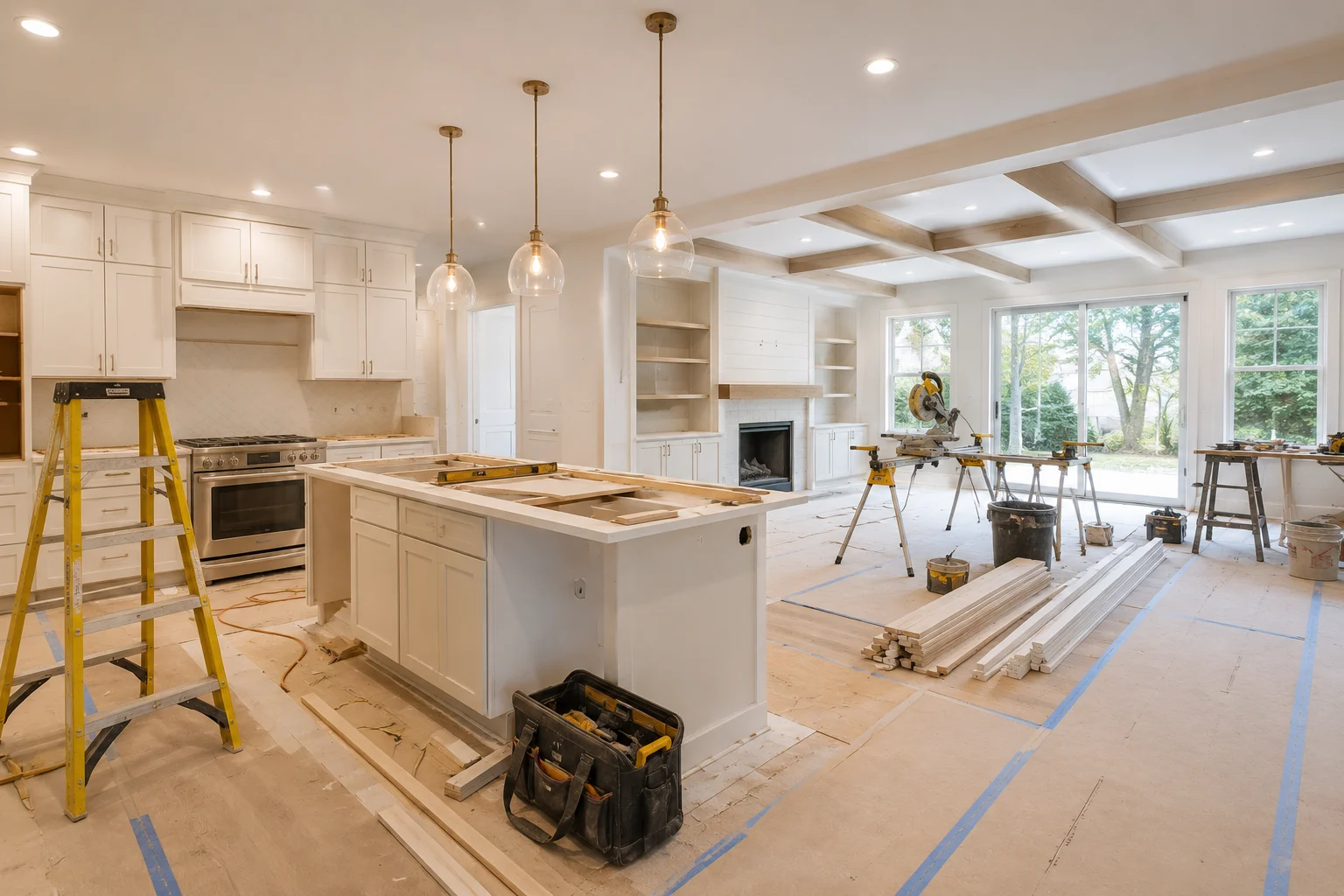
Step 8: Demolition Begins
Now the visible transformation starts.
Depending on the project, demolition may involve removing:
- Cabinets
- Countertops
- Flooring
- Tile
- Drywall
- Plumbing fixtures
- Interior walls
- Doors and windows
- Built-in features
- Existing electrical or plumbing components
Demolition can also reveal conditions that couldn’t reasonably be identified beforehand.
That’s one reason your contingency budget is important.
Step 9: Complete Structural Work and Framing
Once demolition is complete, structural modifications can begin.
This might include:
- Removing or modifying walls
- Installing structural beams
- Building new walls
- Creating door openings
- Framing additions
- Modifying ceilings
- Repairing damaged framing
- Creating new room layouts
Structural work generally needs to happen before the mechanical systems and finishes.
The source material similarly places demolition, framing, electrical/plumbing/HVAC work, insulation and drywall ahead of finish work.
Step 10: Plumbing, Electrical and HVAC Rough-Ins
Once the framing is established, the trades can complete their rough-in work.
Plumbing
This could include relocating:
- Kitchen sinks
- Island plumbing
- Showers
- Bathtubs
- Toilets
- Vanities
- Water lines
- Drain lines
Electrical
Electrical work may include:
- New outlets
- Recessed lighting
- Under-cabinet lighting
- Dedicated appliance circuits
- Switch relocation
- New electrical panels or circuits
HVAC
Changes to your floor plan may require relocating or modifying ducts, registers, returns or other HVAC components.
This phase is especially important during Arizona renovations because heating and cooling performance should be considered whenever the home’s layout changes.
Step 11: Insulation, Drywall and Wall Preparation
Once rough-in work and applicable inspections are complete, walls can begin closing.
The process can include:
Insulation → Drywall → Taping → Texture → Primer
At this stage, the project starts looking like a home again instead of a construction site.
Step 12: Install Flooring, Cabinets and Interior Finishes
Now the design starts becoming reality.
Depending on the project’s construction sequence, this phase can include:
- Tile installation
- Hardwood or engineered flooring
- Luxury vinyl flooring
- Kitchen cabinetry
- Bathroom vanities
- Interior doors
- Trim
- Baseboards
- Interior painting
Careful coordination becomes extremely important because several trades may be working around each other.
Step 13: Install Countertops and Backsplash
After the cabinets are properly installed, countertops can typically be measured, fabricated and installed.
Popular choices for Arizona homes include:
- Quartz
- Quartzite
- Granite
- Porcelain
- Natural stone
Once countertops are installed, backsplash tile and related finish work can follow.
For kitchens, this is often the stage where homeowners finally begin seeing the finished design they imagined.
Step 14: Install Fixtures, Appliances and Finish Details
The final construction phase includes many of the details homeowners notice most.
That may include:
- Faucets
- Sinks
- Toilets
- Shower fixtures
- Glass shower enclosures
- Mirrors
- Cabinet hardware
- Lighting fixtures
- Switches and outlets
- Appliances
- Door hardware
- Decorative finishes
Even though these items are smaller than framing or drywall, the details can have a major impact on the finished appearance.
Step 15: Complete Final Inspections
If the project required permits, applicable final inspections should be completed.
The exact inspections depend on the scope of work and local requirements.
Any outstanding corrections should be addressed before the project is considered complete.
Step 16: Complete the Final Walkthrough
Before the project is officially finished, walk through the renovated areas with your contractor.
Look at:
- Cabinet alignment
- Doors and drawers
- Countertops
- Flooring
- Tile and grout
- Paint
- Trim
- Plumbing fixtures
- Electrical fixtures
- Appliances
- Doors
- Windows
- Hardware
Any remaining minor items can be documented and addressed.
The renovation process should conclude with cleanup and a final walkthrough before handoff.
Step 17: Enjoy Your Newly Renovated Arizona Home
After weeks or months of planning, construction and decision-making, this is the best part:
Enjoy your new space.
A successful renovation shouldn’t simply make your home look newer. It should improve how you live in it.
The right remodeling project can create better functionality, additional storage, improved flow, more comfortable living spaces and a design that better reflects your lifestyle.
Complete Home Renovation Checklist
Use this quick checklist when planning your project:
- ☐ Define renovation goals
- ☐ Separate needs from wants
- ☐ Establish your budget
- ☐ Set aside a contingency
- ☐ Select a licensed contractor
- ☐ Develop the design
- ☐ Finalize floor plans
- ☐ Determine engineering requirements
- ☐ Obtain required permits
- ☐ Select materials and finishes
- ☐ Order long-lead materials
- ☐ Prepare the property
- ☐ Complete demolition
- ☐ Complete structural work and framing
- ☐ Complete plumbing rough-in
- ☐ Complete electrical rough-in
- ☐ Complete HVAC work
- ☐ Complete required inspections
- ☐ Install insulation and drywall
- ☐ Paint and complete wall finishes
- ☐ Install flooring
- ☐ Install cabinets and vanities
- ☐ Install countertops
- ☐ Install backsplash and tile
- ☐ Install plumbing and electrical fixtures
- ☐ Install appliances
- ☐ Complete finish carpentry
- ☐ Complete final inspections
- ☐ Complete construction cleanup
- ☐ Conduct final walkthrough
- ☐ Complete remaining punch-list items
- ☐ Enjoy your renovated home
Frequently Asked Questions About Home Renovation
What is the correct order for renovating a house?
A typical home renovation progresses from planning and design to permitting, site preparation, demolition, structural work, plumbing/electrical/HVAC rough-ins, drywall, flooring, cabinets, countertops, fixtures, inspections and final walkthrough. The exact sequence can change depending on the project.
How much extra money should I budget for a renovation?
A common planning approach is to maintain approximately 10%–20% of the project budget as a contingency for unforeseen conditions or changes.
Should I buy materials before starting a renovation?
Whenever practical, major selections and long-lead materials should be finalized before demolition. This can reduce delays caused by material availability, shipping and design changes.
What usually makes a home renovation more expensive?
Structural changes and major modifications to plumbing, electrical and HVAC systems can substantially affect renovation costs.
Which rooms should I renovate first?
For a whole-home renovation, kitchens frequently require significant planning, trade coordination and material selections. If you’re renovating only part of the house, prioritize the space that provides the greatest improvement to your home’s functionality and your everyday life. The source you provided likewise recommends prioritizing the kitchen for many wholehome projects or otherwise starting with the homeowner’s highest-priority room.
Planning a Home Renovation in Arizona?
At Refine Construction LLC, we help Arizona homeowners turn outdated spaces into functional, modern homes designed around the way they live.
From kitchen and bathroom renovations to complete home remodeling, additions and new construction, our team can manage your project from initial planning through completion.
Licensed • Insured • Bonded
ROC #346669
Serving Scottsdale, Fountain Hills, Paradise Valley, Rio Verde and the Phoenix Metro Area.
Call Refine Construction: 480-720-0260 Website: RefineConstructionLLC.com
Ready to Start Your Renovation?
Schedule a free consultation with Refine Construction and let’s discuss your project.